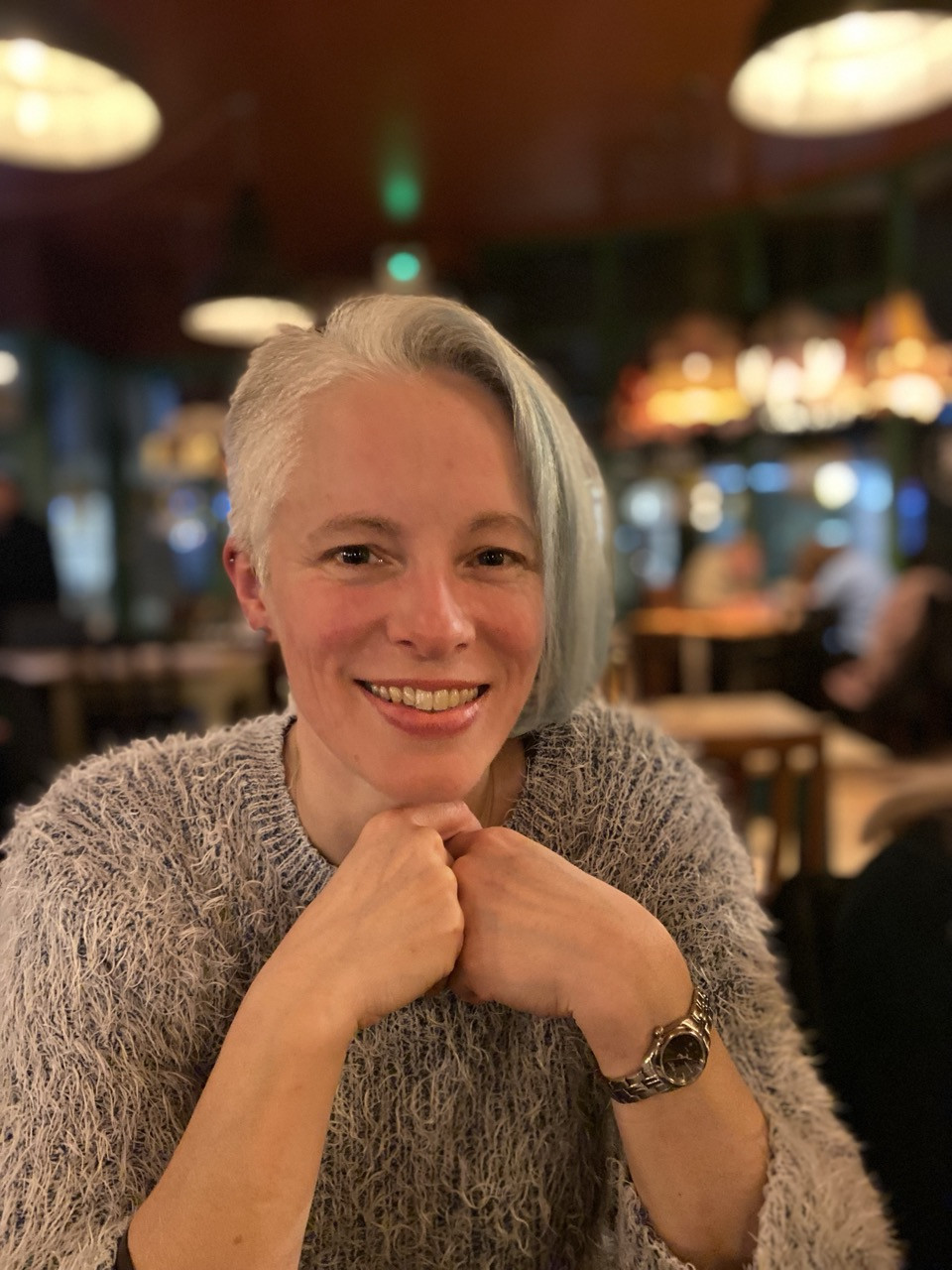
I was born in Nyon, Switzerland, to an English mother and a father with English and Dutch roots. I grew up in England, went to grammar school in Buckinghamshire and met the boy who would become my husband just before my fifteenth birthday. We’ve been together ever since and have been blessed with three wonderful daughters.
Those are the brief biographical facts, but they don’t tell you very much about why I think the way I do. For that, you need the less tidy version: the work I loved and had to leave, the things I had to learn, the people I brought in to help, and the repeated business of finding another way when the obvious route wasn’t available.
When my world was turned upside down
I began my working life in social care, supporting people with disabilities. It was work I loved, but at around twenty my own health deteriorated and, at twenty-one, I was medically retired with Fibromyalgia. I was prescribed medication and felt as though I’d been put out to pasture, at an age when my adult life should have been beginning.
I had no roadmap for what came next. There was the immediate question of managing my health, but there was also the larger question of how to build a life around circumstances I hadn’t chosen. Being told I could no longer do that work didn’t answer either of them.
I’ve lived with varying degrees of chronic pain ever since. Fibromyalgia, together with hypermobility, became part of my life, but I was never very good at accepting that a problem automatically had to become the boundary of it. That isn’t a claim that determination makes illness disappear; it’s an explanation of why I keep asking what might still be possible.
Finding another route
I forged a second career in IT, becoming a technical trainer and writing and delivering courses. There is something about that work which fits the way my mind operates: you have to understand a complicated subject well enough to make it usable by somebody else. Collecting information is only part of the job; the useful part is helping someone see what to do with it.
Then I developed repetitive strain injury, so I taught myself to use the mouse left-handed. It’s a small detail, but quite a good illustration of my instinct when something gets in the way. I want to know how to get around it, what I need to learn and whether there is another route worth trying.
I describe myself as a pathological Virgo. Give me a problem and I’ll gather information — probably too much information — before sorting through it, questioning it and trying to separate what matters from what doesn’t. Eventually, I want the complexity to become something we can actually use.
Motherhood and the matriarch
I gave birth naturally to all three of our daughters, with my second and third born at home. Breastfeeding was a real struggle at first, with bleeding nipples and not enough milk, but I persevered. Later, I volunteered as a breastfeeding peer advisor because I wanted to use that experience to help other mothers through difficulties of their own.
I later home educated all three daughters until they were sixteen. Taking responsibility for their education never meant pretending I could teach them everything. I taught what I could and found people who knew more than I did when we needed them.
That meant physics and chemistry teachers, music teachers, tennis coaches and martial-arts instructors. My responsibility was to make sure the expertise was available, rather than to become every specialist myself. It is a distinction that has stayed with me, because I think it applies to much more than education.
I also wrote guides for other home-educating parents, including material on teaching children to read. I wanted parents to feel able to take an active role, with useful information and the confidence to bring in help where they needed it. Writing was another way of making what I’d learned available beyond our own family.
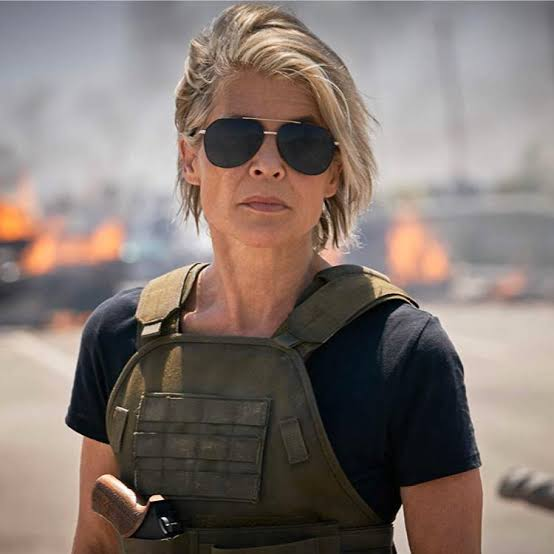
A little Sarah Connor
As a science-fiction fan, I’ve joked that there was a little Sarah Connor in my approach to motherhood. I couldn’t protect my daughters from everything life might throw at them. My job was to help prepare them for it, so that they could think for themselves, look after themselves and look after each other.
That’s part of what I mean by being the matriarch: noticing what needs attention, anticipating where possible and finding good people when expertise is needed. It doesn’t require doing everything yourself. In fact, recognising what you don’t know is often where taking responsibility begins.
Learning about health
Alongside family life and work, I’ve spent decades managing my own health. I’ve worked with doctors, physiotherapists, osteopaths, chiropractors and complementary practitioners, studied health extensively, and qualified as a Homeopath and Live Blood Analyst.
I’ve also journalled for years. When something unfolds over months or years, remembering how you felt, what you changed and when you changed it becomes difficult. A record doesn’t give you every answer, but it gives you something more useful to work with than a collection of impressions recalled at the next appointment.
My preference is to work as naturally as possible, with attention to food, movement, sleep, stress, environment and everyday habits. That doesn’t mean conventional medicine has no place. It means I want to understand the wider picture and make purposeful choices, including knowing when appropriate medical investigation or specialist expertise is needed.
Nor am I presenting a perfectly managed life. I enjoy good quality chocolate, homemade cake and an occasional drink, and not all of my interests are health-related. History, science fiction and ghost hunting all have a place in my particular life. Health matters because there is a life to live with it.
Loss, questions and perspective
Before 2020, I lost my father to cancer. His illness and treatment were profound experiences for our family and strengthened my instinct to ask questions and understand the options. My views about his experience are personal; they don’t establish what another person should do.
During the Covid era I was vocal about bodily autonomy and people’s right to make informed choices about vaccination. The enduring principle, for me, is broader than one event: people should remain active participants in decisions affecting their own bodies. Listening to expertise and asking questions belong in the same conversation.
Bringing the story together
Across these different parts of my life, I kept returning to a similar problem. Information was scattered, different people held different pieces, and treatments could be tried without a clear or reliable way of recognising change. The person living through it all was the one who needed to make sense of the whole.
I wanted a way to bring that story together, to make useful measures visible and to involve the right people without losing the individual at the centre. That became Health Journal, and the thinking behind it became the framework I share here: understand, simplify, act and learn.
I don’t have all the answers. What I do have is a long-standing interest in finding better questions, turning complexity into something practical and helping people become more capable of managing the things that matter to them.